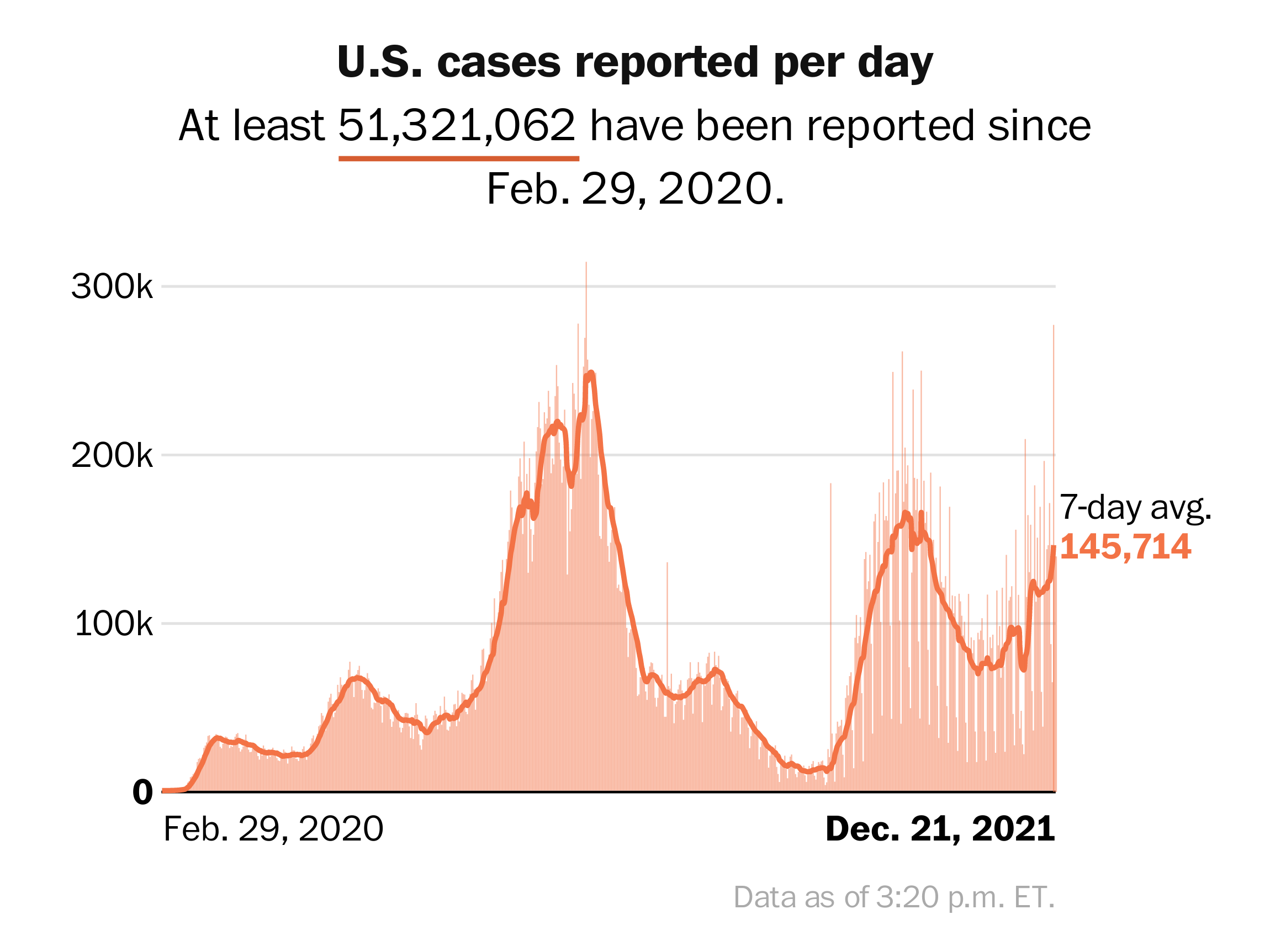
| First, the good news. Based on what we know so far, omicron isn't as fatal as past iterations of the coronavirus — and vaccines continue to protect people from serious illness or even death. But that's pretty much it. Omicron, as you well know, is sweeping through the world with incredible speed. We first learned about it over Thanksgiving; by Christmastime it was the dominant strain in America. The government warns of a coming "national surge." President Biden is trying to appear on top of it, but there's not a lot he can do to stop people from getting infected, especially as the unvaccinated remain stubbornly unvaccinated. "We aren't as vaccinated as a country as we should be," he said today, adding: "Omicron is serious, potentially deadly business for unvaccinated people." To that end, he's moved away from prevention toward mitigation. Biden announced today that his administration is racing to get tests into people's hands so at least people know when they're infected. They're going to bypass insurance and just mail a half-billion tests to people at their homes. (The government will set up a website where you can request one, although they won't become available until January.) Last week, that was apparently a far-fetched idea. "Should we just send one to every American?" White House press secretary Jen Psaki said when reporters asked her why testing wasn't more widely available. Apparently so. Days before Christmas, Americans who want to safely spend the holidays with their family can't find tests. Reporters asked Biden if the empty drugstore shelves and long lines at testing sites was a failure of planning on his part. His response: "The omicron virus spread more rapidly than anyone thought." 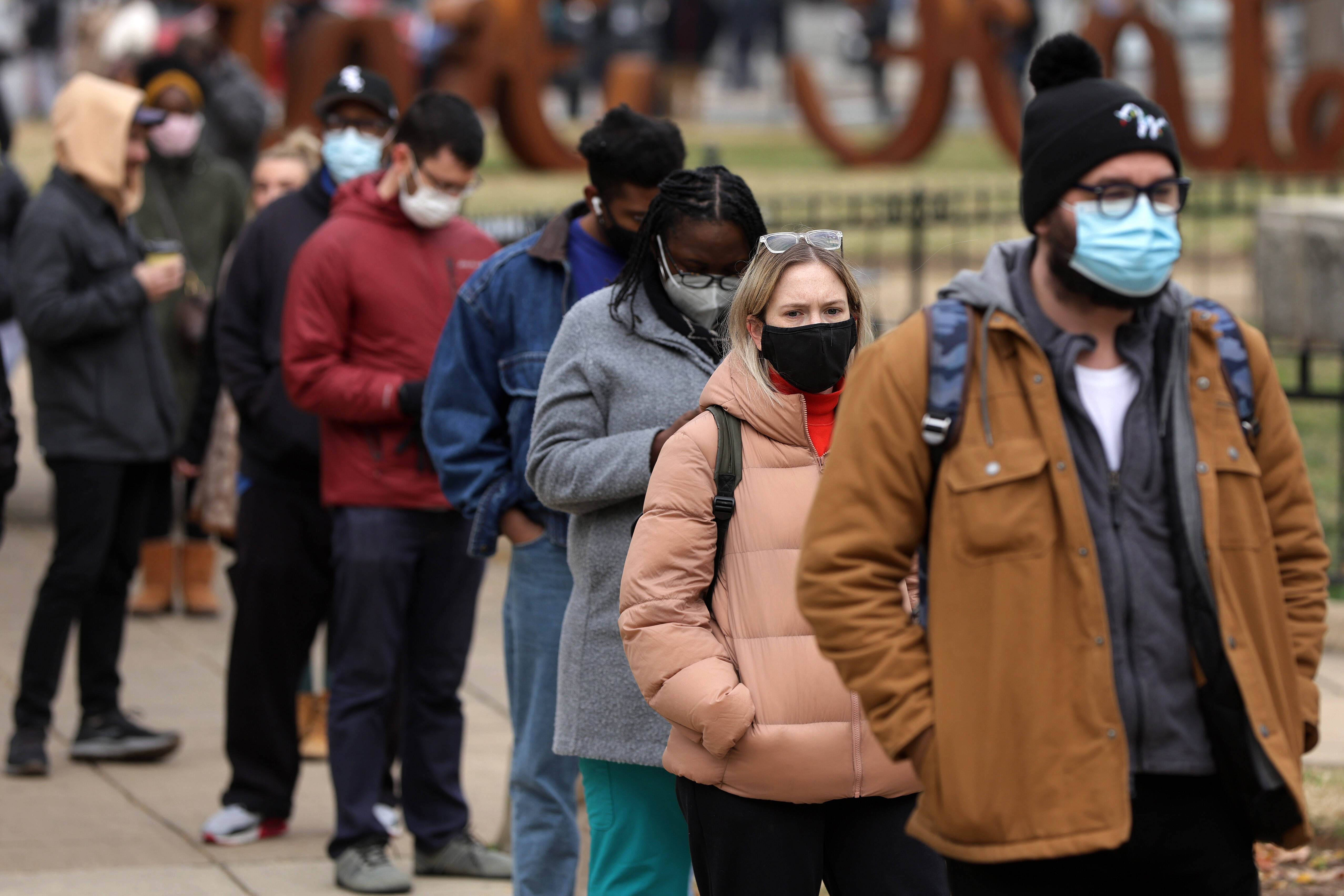 People wait in line for coronavirus tests in Washington on Tuesday. (Alex Wong/Getty Images) | Whether he should have predicted this sooner is up for debate. Right now, Biden stressed that many of us are about to get covid-19, that it could overwhelm some hospitals, and he's trying to jolt Americans into caring more about stopping its spread: "I know you're tired," he said. "And I know you're frustrated. We all want this to be over. But we're still in it. And this is a critical moment. We've also had more tools than we've had before. We are ready. We'll get through this." Trump is triple-vaccinated, and he wants you to know about it 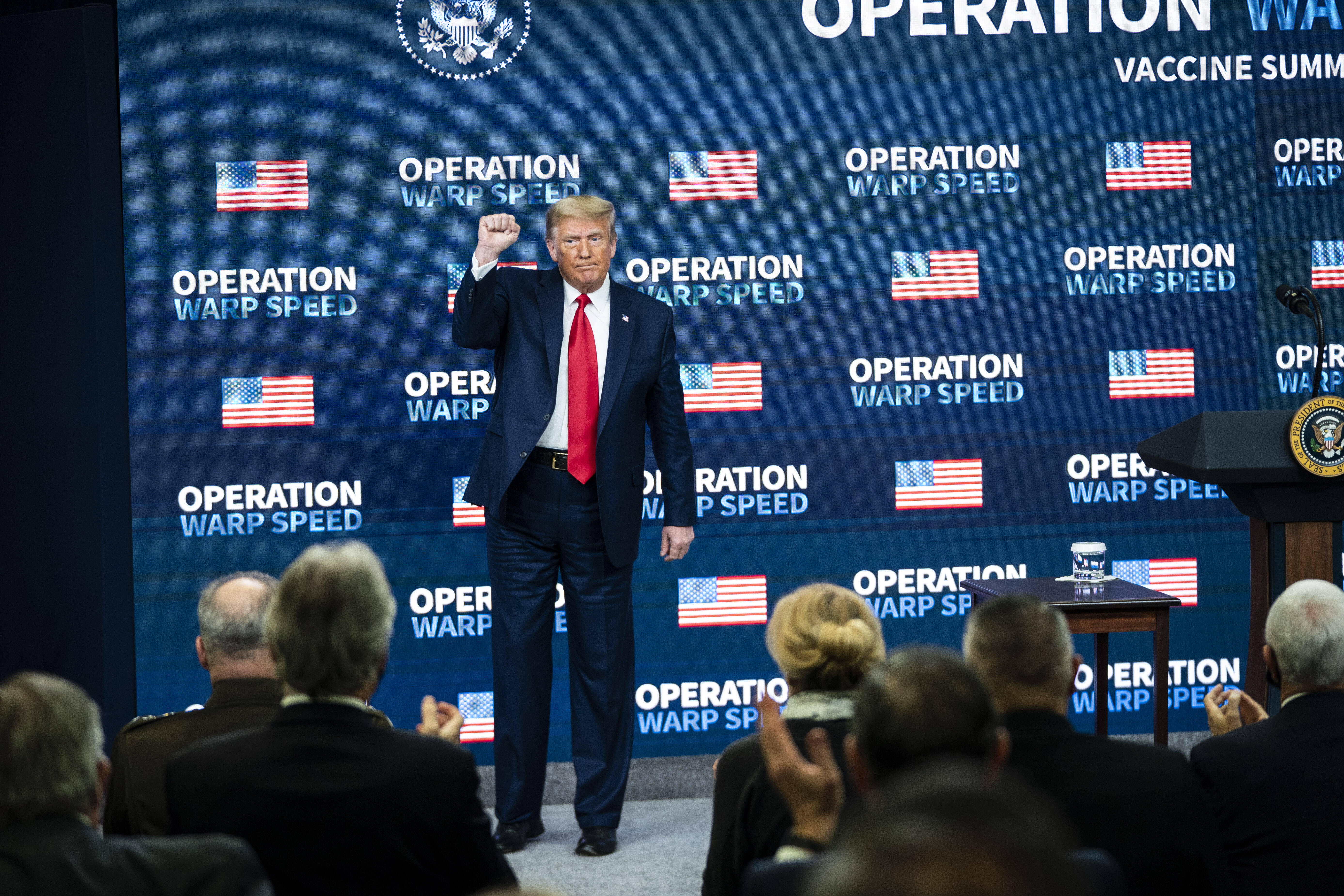 Trump in December last year championing vaccine development. (Jabin Botsford/The Washington Post) | Trump's stance on vaccines has been confusing. The former president has been a vaccine-booster skeptic, while also taking credit for the rapid development of vaccines during his administration. (Biden even gave "the prior administration" credit for this today.) He initially kept his own vaccination private and did little to tamp down vaccine conspiracy theories spread by his supporters. Trump did finally announce he'd been vaccinated. And he said Sunday that he got a booster — information he didn't have to disclose but chose to. That has the potential to be powerful, writes The Post's Aaron Blake: "To the extent that Trump's allies continue to resist the vaccine and baselessly claim it's dangerous or not worth it, they are expressly opposing their beloved former president." It's also possible many of these people were predisposed to opposing vaccines and Trump simply harnessed that, wondered The Post's Philip Bump. Now vaccine skepticism could have a life of its own. Whatever the origin, there's a pretty big market for anti-vaccination messages. It's a dynamic Fox News understands well and something Biden angrily pointed out today: "These companies and personalities are making money by peddling lies and allowing misinformation that can kill their own customers and their own supporters," he said. "It's wrong. It's immoral." It continues. Population growth (or lack thereof): One of the many lasting impacts of this pandemic As more people die of covid-19, fewer women are giving birth. That means the U.S. population grew in 2021 at its slowest rate ever – like since its founding, according to a new analysis from the Census Bureau. It's hard to say what that means for politics in this country. The conventional wisdom is that older Americans tend to be more conservative. But one of the fastest-growing populations — the Latino community, which makes up about 19 percent of the population — is also helping turn states such as Florida more conservative. And rural communities are losing people faster than urban areas. But conservative states such as Idaho are some of the fastest-growing states in the nation, while liberal states such as Massachusetts and California are losing residents, the Census Bureau said. It's going to be a long time before we fully realize how and how much the pandemic has reshaped American life. | 




 Email
Email