 | | By Alexandra Ellerbeck | | | Good morning and welcome to The Climate 202! This is Alexandra Ellerbeck, the Climate 202 researcher, filling in for anchor Maxine Joselow. We can't believe this year is almost over. But this is the last week we'll be publishing in 2021, so we're taking the opportunity to look back. | These are the top climate stories of 2021 | 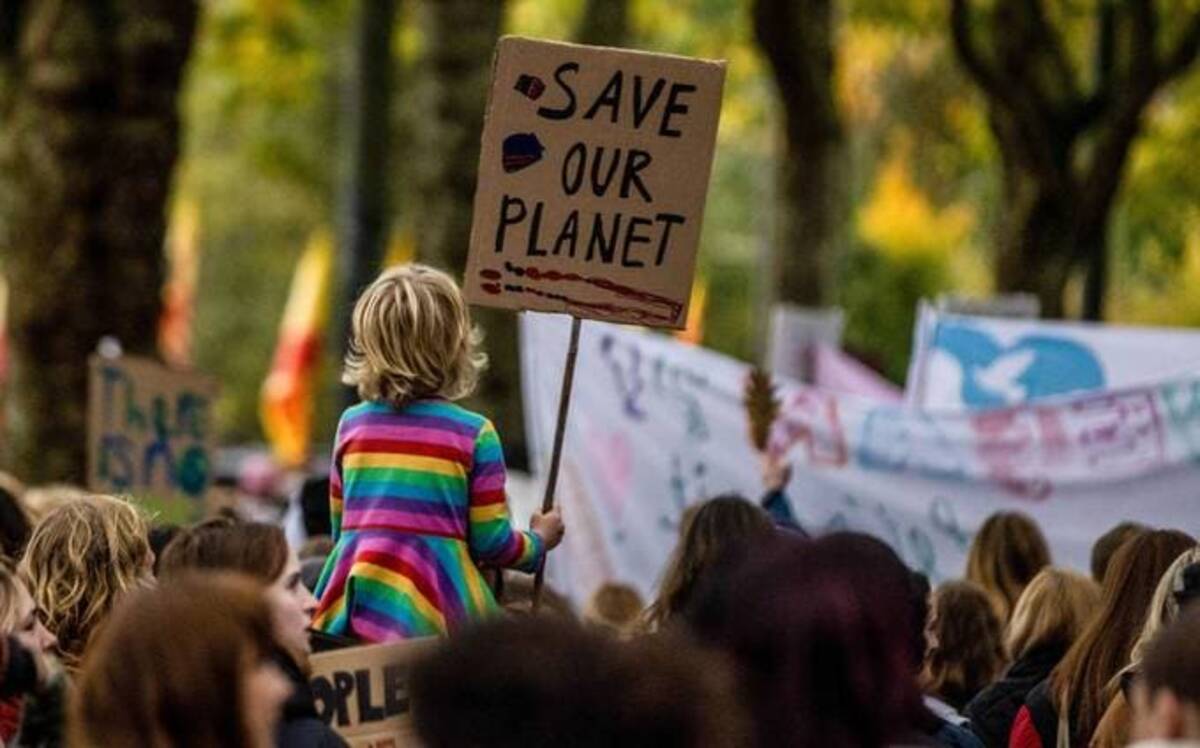 A protest march at the COP26 climate talks in Glasgow on Nov. 5. (Jonne Roriz/Bloomberg) | | | Activists hoped that 2021, marked by the inauguration of a U.S. president who called climate change an "existential threat" and the biggest United Nations climate summit since the 2015 Paris agreement, would be a pivotal year for efforts to stop climate change. But as 2022 approaches, Democrats are still scrambling to pass their key climate legislation amid intraparty divisions, while the U.N. climate summit punted many of the thorniest issues in international climate diplomacy to next year. Meanwhile, the effects of climate change continued apace, with extreme weather causing devastating flooding and heat waves. Here's a look back at the biggest stories this year: 1. The goal of 1.5 degrees is alive but on life support after the U.N. summit. World leaders, delegates, activists and celebrities from nearly 200 nations descended on Glasgow, Scotland, at the end of October for what was certainly the biggest climate event of the year. But the two weeks of fierce negotiations over emissions commitments, carbon trading and reparations for climate damage was not enough to put the world on track to avoiding catastrophic climate change. | | Research from the United Nations estimated that countries' short-term climate commitments put the world on a path to warm 2.5 degrees Celsius (4.5 degrees Fahrenheit) — a full degree above the 1.5-degree target that scientists say is the upper limit of warming that avoids the worst effects of climate change. The goal of the summit centered instead on keeping the possibility of 1.5 alive. To this end, the final text of the bill accelerated the timeline for climate commitments, calling on countries to revisit and strengthen their climate targets by the end of 2022. "[W]e can say with credibility that we have kept 1.5 degrees within reach, but its pulse is weak," COP26 President Alok Sharma said after the summit. Sharma appeared emotional on the final day of the summit when China and India mounted a successful last-minute change to the text, weakening the language around coal. "I apologize for the way this process has unfolded," he told negotiators, his voice almost breaking. 2. President Biden has moved to undo his predecessor's environmental actions. Biden came into office promising a full, government-wide effort on climate change. And he started with a bang, signing measures to rejoin the Paris climate accord and block the Keystone XL pipeline on his first day in office. Under the Biden administration, 50 of Donald Trump's environmental policies have been overturned and Biden has added 31 new measures and proposed 28 others, according to The Washington Post's environmental action tracker. His latest executive order, on Dec. 8, calls for the federal government to be carbon neutral by 2050. But he has also faced criticism from environmentalists over his administration's continued support for the Dakota Access Pipeline and its sale of oil and gas drilling leases on federal land. Last month, the administration offered leases on more than 80 million acres in the Gulf of Mexico, the largest offshore oil and gas lease sale in U.S. history. The administration has insisted that its hands are tied by an order from a Trump-appointed federal judge in Louisiana that blocked its efforts to pause lease sales on public lands. But the Justice Department recognized in an August memo that the court decision did not compel the lease sale in the gulf, the Guardian reported yesterday. | | 3. Will we see the biggest climate investment in U.S. history? It's still unfolding. One of the biggest domestic climate stories of the year has not technically happened yet. But if Democratic leaders get their way, Congress will pass the biggest investment in climate change in U.S. history before the year is out. Emphasis on "if." Senate Majority Leader Charles E. Schumer (D-N.Y.) has said he wants to pass Democrats' roughly $2 trillion economic package, which includes $555 billion in climate funding, before Christmas. But that may be a tall order. Democrats cannot afford to lose a single vote in the Senate, and Sen. Joe Manchin III of West Virginia has not yet committed to voting for the bill. Manchin has already forced Democrats to abandon a provision that would have compelled utilities to switch to clean energy. He has also indicated that he's not a fan of a subsidy for union-made electric vehicles or a proposed fee on methane included in the House bill. Republicans, for their part, argue that Biden's climate agenda would increase prices and exacerbate inflation. GOP lawmakers have tried to tie a recent spike in gas prices to Biden's climate policies, including cancellation of the Keystone XL pipeline, although energy experts say the increased prices are primarily because of a drop in production amid the coronavirus pandemic. 4. Several countries are underreporting their emissions. A Post investigation found a staggering gap between the emissions that countries report to the United Nations and what they actually release into the air. Low-end estimates for the gap put it at 8.5 billion tons of greenhouse gases — an amount larger than the yearly emissions of the United States. At the high end, the gap between reported emissions and what countries actually put into the atmosphere could be as high as 13.3 billion tons — an amount that approaches the emissions from China and would account for nearly a quarter of humanity's contributions to global warming. 5. The impact of climate change hit home for many Americans. | | In Portland, Ore., people died of heat exposure in their homes. In Louisiana, homes were flattened by hurricane winds and thousands were displaced. In Tennessee, twin babies were torn from their father's arms during a flash flood. Nearly 1 in 3 experienced a weather disaster over the summer, according to a Post analysis of federal disaster declarations. Authorities investigated about 800 deaths in Oregon, Washington and western Canada potentially linked to a summer heat wave. California, meanwhile, is moving toward ranking and naming heat waves, starting with a pilot program in Los Angeles. The link between other weather events and climate change is under investigation. Some scientists think climate change may have contributed to a tornado strike late Friday that ripped through the South and Midwest, killing dozens. And while scientists largely agree that climate change makes Atlantic hurricanes more intense and less predictable, whether it makes them more frequent is an open question. Some experts think it does, and this year was the sixth in a row that the Atlantic saw higher-than-average hurricane activity. | | |  | On the Hill | | Democrats unveil an updated BBB tax plan | 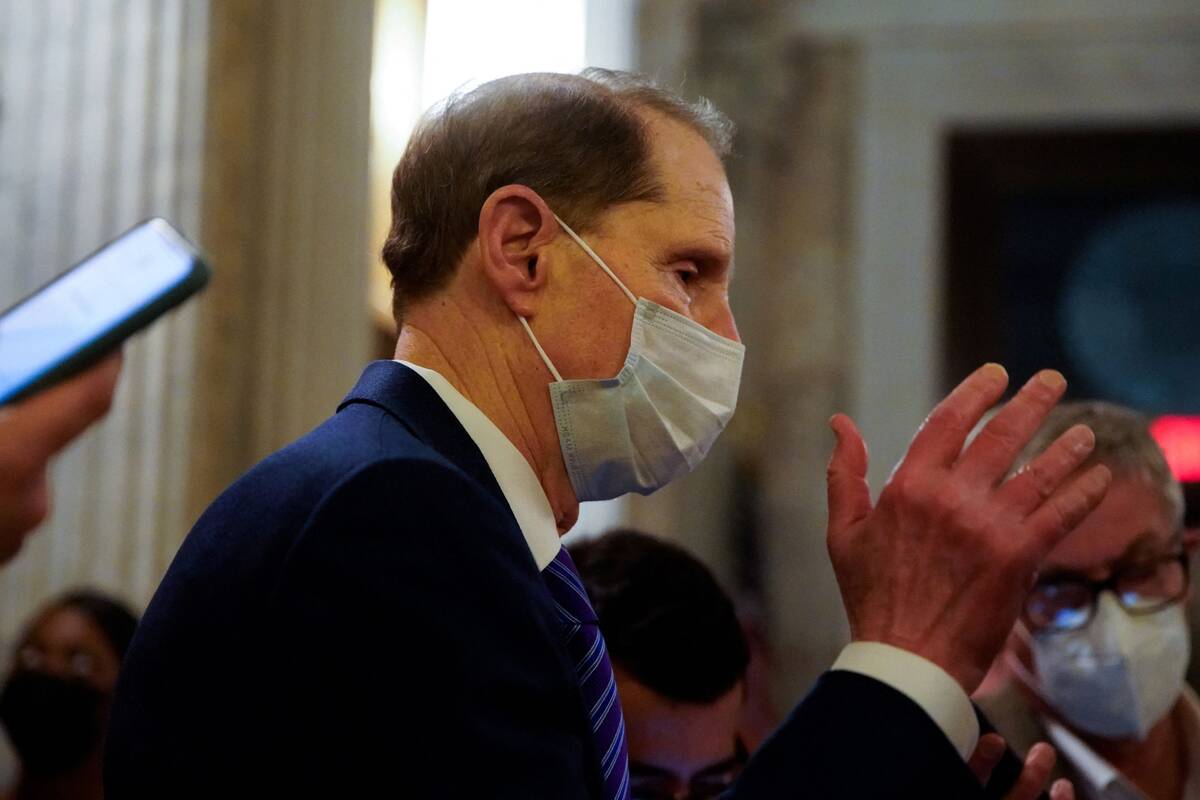 Sen. Ron Wyden (D-Ore.) speaks with reporters after a vote Dec. 9. (Elizabeth Frantz/Reuters) | | | Senate Finance Chairman Ron Wyden (D-Ore.) released new draft text of the tax portion of the Build Back Better Act over the weekend. The new text, which is subject to change as Democrats try to shore up Manchin's support, left out modifications to the 45Q tax credit sought by carbon-capture supporters, while it included a 30 percent investment tax credit for hydropower facilities that the hydropower industry had lobbied for in recent months. "We applaud Sen. Wyden for recognizing that hydropower is an essential part of a climate solution. The targeted investments in environmental enhancements will help preserve the existing zero-carbon hydropower fleet and improve the health of our rivers," Malcolm Woolf, CEO of the National Hydropower Association, said in an emailed statement to The Climate 202. Meanwhile, Manchin's office said the senator had a "productive" phone call with Biden yesterday about the legislation. | Much of Manchin's family income from coal is not covered by a blind trust | 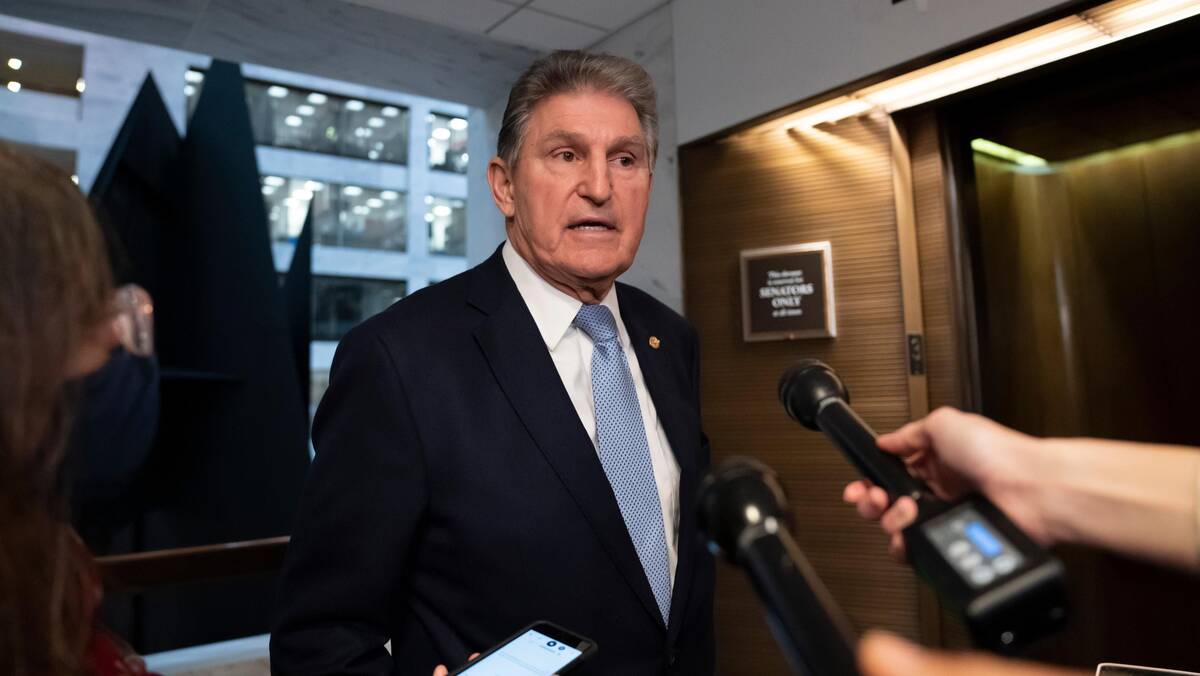 Sen. Joe Manchin III (D-W.Va.) leaves his office Dec. 13 after speaking with the president. (J. Scott Applewhite/AP) | | | Manchin's family has made millions by selling waste coal from abandoned mines to a West Virginia power plant. When pressed whether that business poses a conflict of interest, Manchin insists that his earnings accrue in a blind trust. "But contrary to his public statements, documents filed by the senator show the blind trust is much too small to account for all his reported earnings from the coal company," The Post's Michael Kranish and Anna Phillips report. Manchin's income from his family's business could have taken a hit from the Clean Electricity Performance Program, a key part of Biden's agenda that would have pushed electric utilities toward clean energy. Manchin played a role in killing that program. The senator's pronouncements about his blind trust are at best misleading and at worst untrue, according to ethics experts who reviewed the documents at The Post's request. | | |  | The power grid | | The White House debuts plan to make EV chargers 'ubiquitous' |  Vice President Harris visits the Brandywine Maintenance Facility in Prince George's County, Md. (Manuel Balce Ceneta/AP) | | | Vice President Kamala Harris and other Biden administration officials unveiled a plan yesterday to build a national network of 500,000 electric vehicle chargers, with a particular emphasis on charging infrastructure in disadvantaged and rural areas, The Post's Michael Laris reports. The plan includes the creation of a Joint Office of Energy and Transportation, an effort by the Energy and Transportation departments to smooth the rollout of electric vehicles. | | |  | Extreme events | | A crucial Antarctic ice shelf could fail within five years |  An ITGC field site on Thwaites Glacier. (Peter Davis/British Antarctic Survey) | | | An Antarctic ice shelf that holds back the Florida-size Thwaites Glacier could fail within three to five years, according to data presented yesterday at the American Geophysical Union's annual meeting, The Post's Sarah Kaplan reports. The shelf's failure could accelerate the movement of inland ice to the sea and eventually contribute to total collapse of the Thwaites, a scenario that could lead to several feet of sea-level rise. | | |  | Viral | | | Happy World Monkey Day to all who celebrate! 🐒 |  | | | | |